My own product, marketplace and SaaS, 2026
Curas
A marketplace and practice platform for holistic therapists.
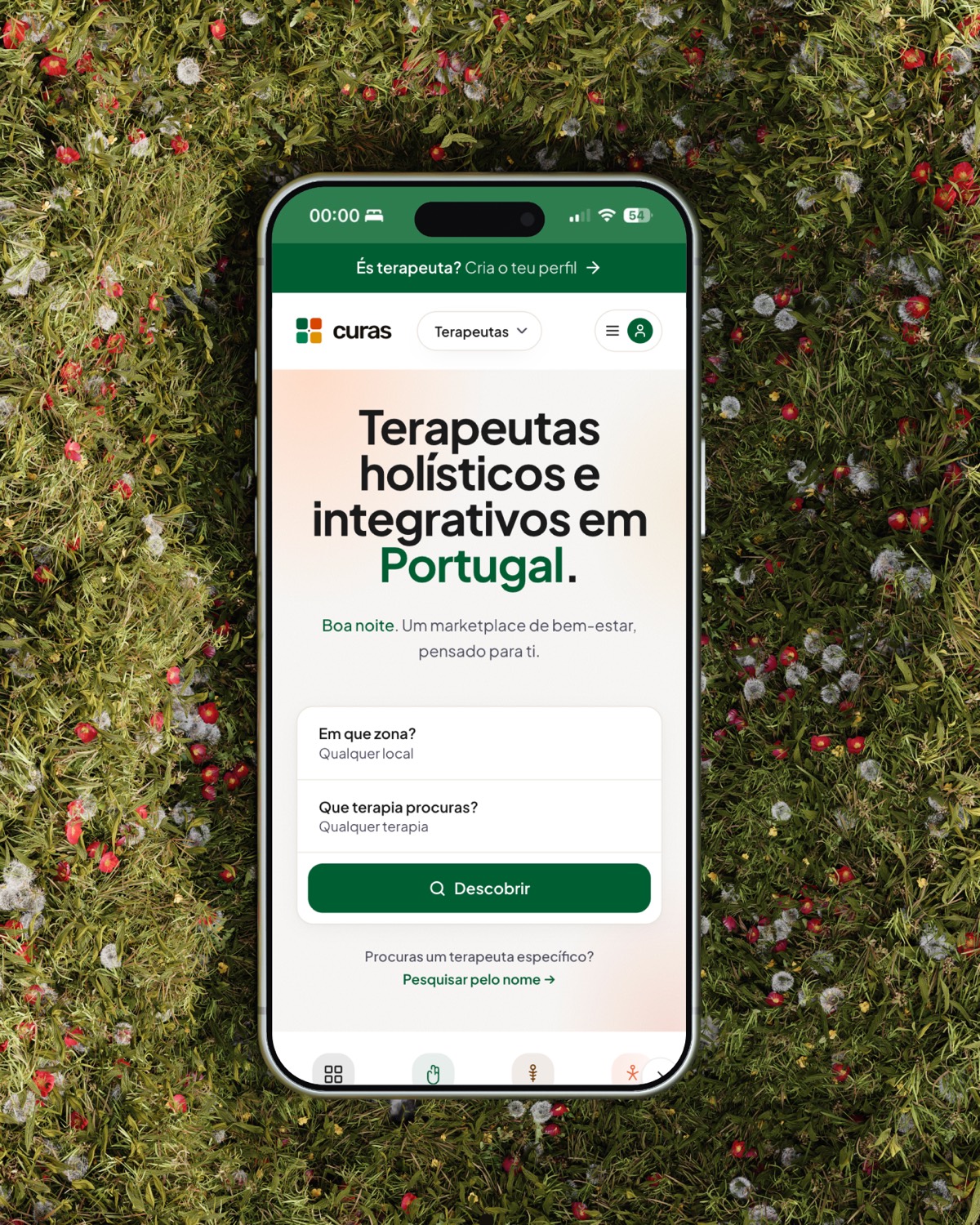
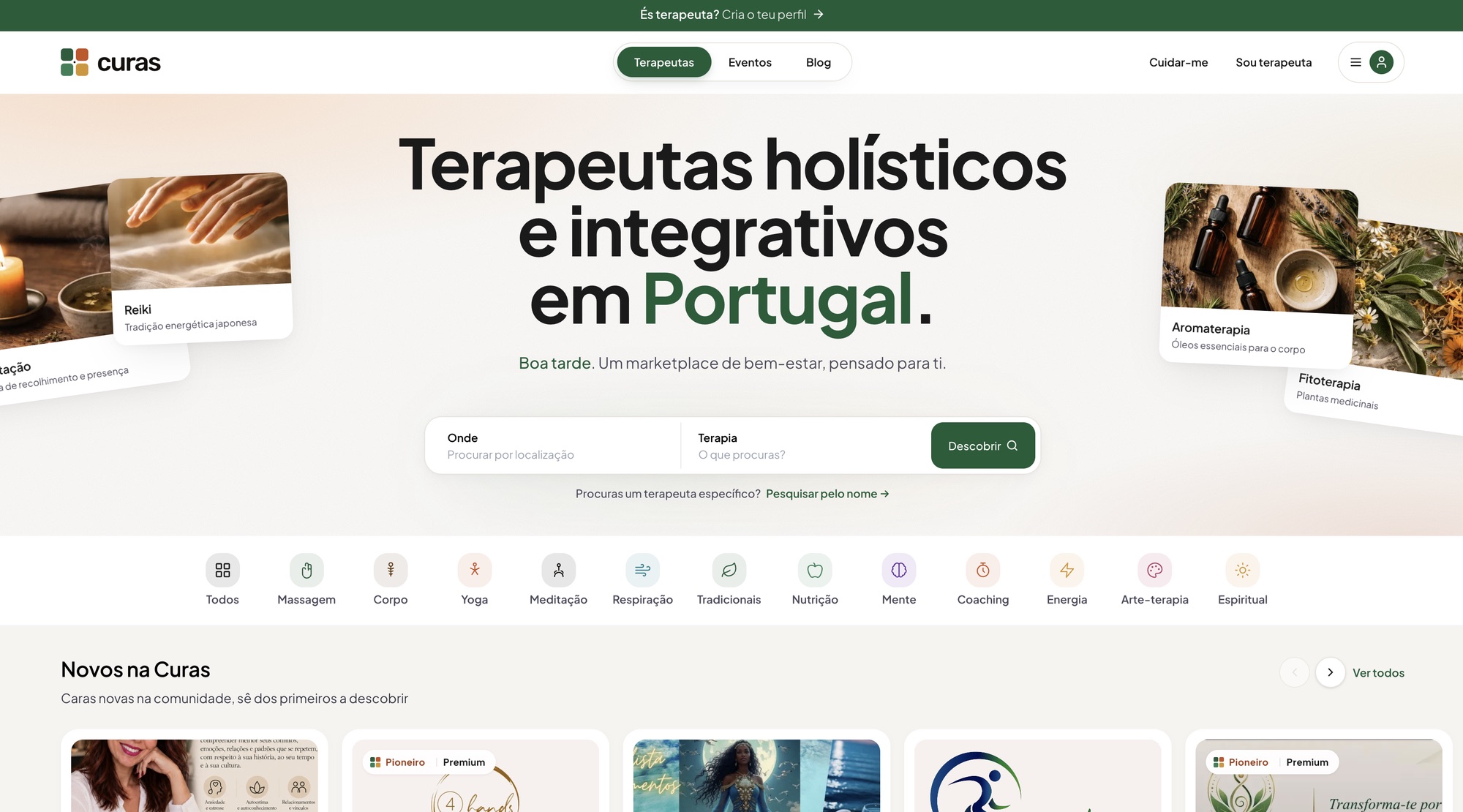
Curas connects clients with holistic therapists in Portugal and gives therapists the tools to run their practice. I own it end to end: business model, product, design, build and growth. It went live six months after the idea, built with AI under my direction.
- Role
- Owner, from concept to live product
- Team
- Solo, with an AI agent system I built
- Scope
- Business model, product, build and growth
- Timeline
- 6 months, live since June 2026
- Traction
- 152 therapists, 104 on Plus or Premium, and 30 clients with sessions booked, September 2026
- Live at
- curas.app
- 152Therapists on the platformAs of September 2026, three months after launch. Supply built from zero.
- 104On Plus or PremiumTwo in three therapists chose a paid plan; most are still in their free launch months.
- 30Clients with sessions bookedDemand side, booking within the same three months.
- 300+Modalities, organisedStructured into 13 areas built to respect how practitioners see themselves.
- 0%Commission on sessionsTherapists keep everything a session earns and pay a subscription instead. The first and most important product decision.
- 4Surfaces shippedMarketplace, therapist portal, client area and the back-office I run the platform from. All in six months.
A common question is whether Curas competes with a full-time role. Day to day it runs on automation, marketing runs on AI agents, and features ship on my schedule. What it adds is operating experience: owning a product's business model, pricing and growth directly.
Overview
Thousands of therapists, hidden on Instagram.
Portugal has thousands of holistic therapists. Most of them are lost in Instagram noise, without the technical skill to build a website, and without the time or training to do their own marketing. The people who need them cannot find them.
Curas puts both sides on one platform. Clients search by place, practice or price and book online, in person or at home. Therapists get a profile, bookings, calendar, messaging and client records, none of which needs technical skill. Behind both sits a back-office I built to run the platform day to day.
Origin
Where it came from.
I work in product and I am also a practising therapist. As a therapist I saw the problem first-hand: skilled practitioners who were hard for clients to find.
I couldn't find a platform built for this audience, so I built one.
What a therapist had
- Instagram noise
- Word of mouth only
- Websites they cannot build
- Marketing they have no time to learn
What Curas gives
- A profile that works for them
- Direct bookings and payments
- Client records and messaging
- Zero commission on their sessions
None of it requires technical skills.
Before building
I interviewed more than 30 therapists before building anything.
Being a therapist myself gave me the hypothesis. The interviews confirmed it: the recurring problem was visibility. These are skilled practitioners with no reliable way to be found.
Therapists should not need marketing skills to be found. That principle set the scope for everything that was built.
The decisions
I made each of these decisions and own their outcomes.
-
A subscription instead of a commission
The obvious model was a cut of every session. I chose not to, trading revenue that scales with bookings for the trust of the supply side. Therapists keep 100% of what a session earns and pay a flat subscription. It was the decision that brought the first therapists on board.
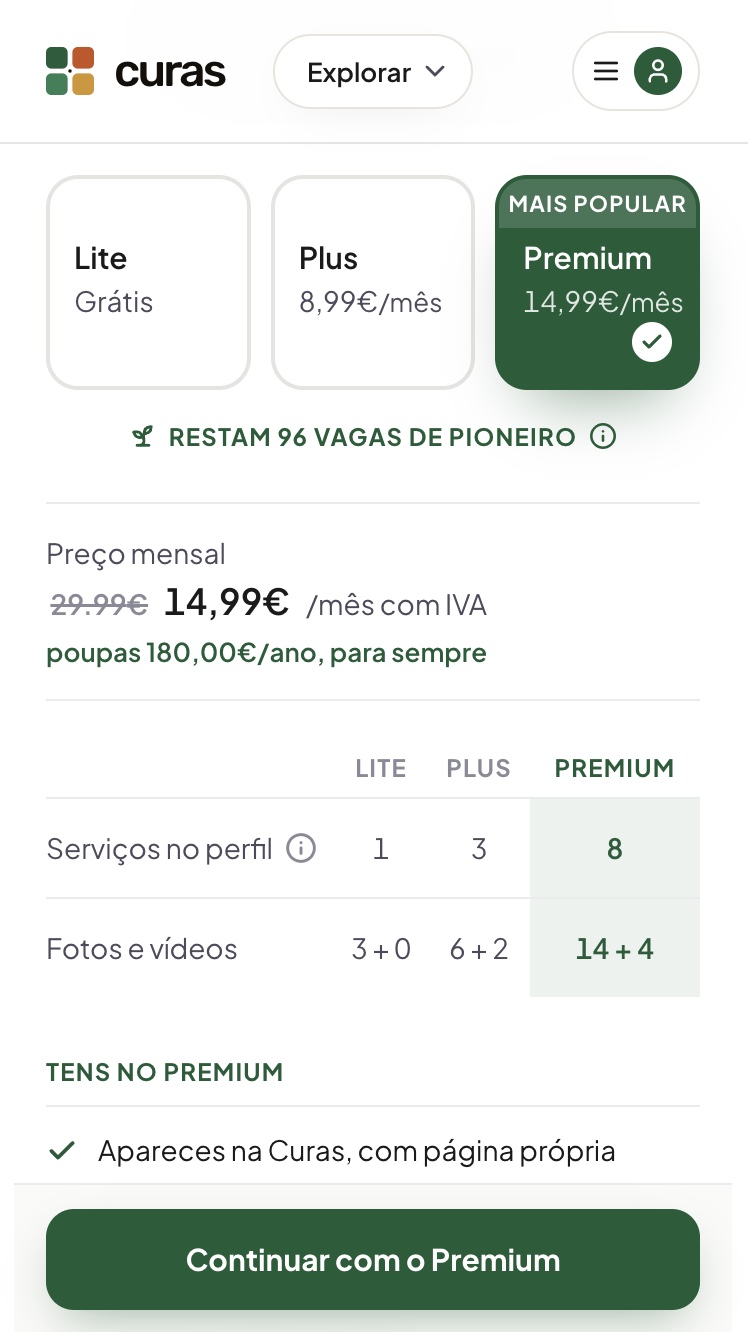
What therapists pay instead of commission: the three plans, live on mobile, with pioneer pricing: the first 200 therapists lock half price for life -
Three tiers, free forever entry
Lite is free for life: being on Curas costs nothing, so trying it carries no risk. Plus and Premium price the practice tools: bookings, records, analytics. Deciding how many tiers, and what earns a place in each, was pricing work I had never owned end to end before this. To bring in the first therapists, the first 200 lock half price for life; 104 have taken a place so far.
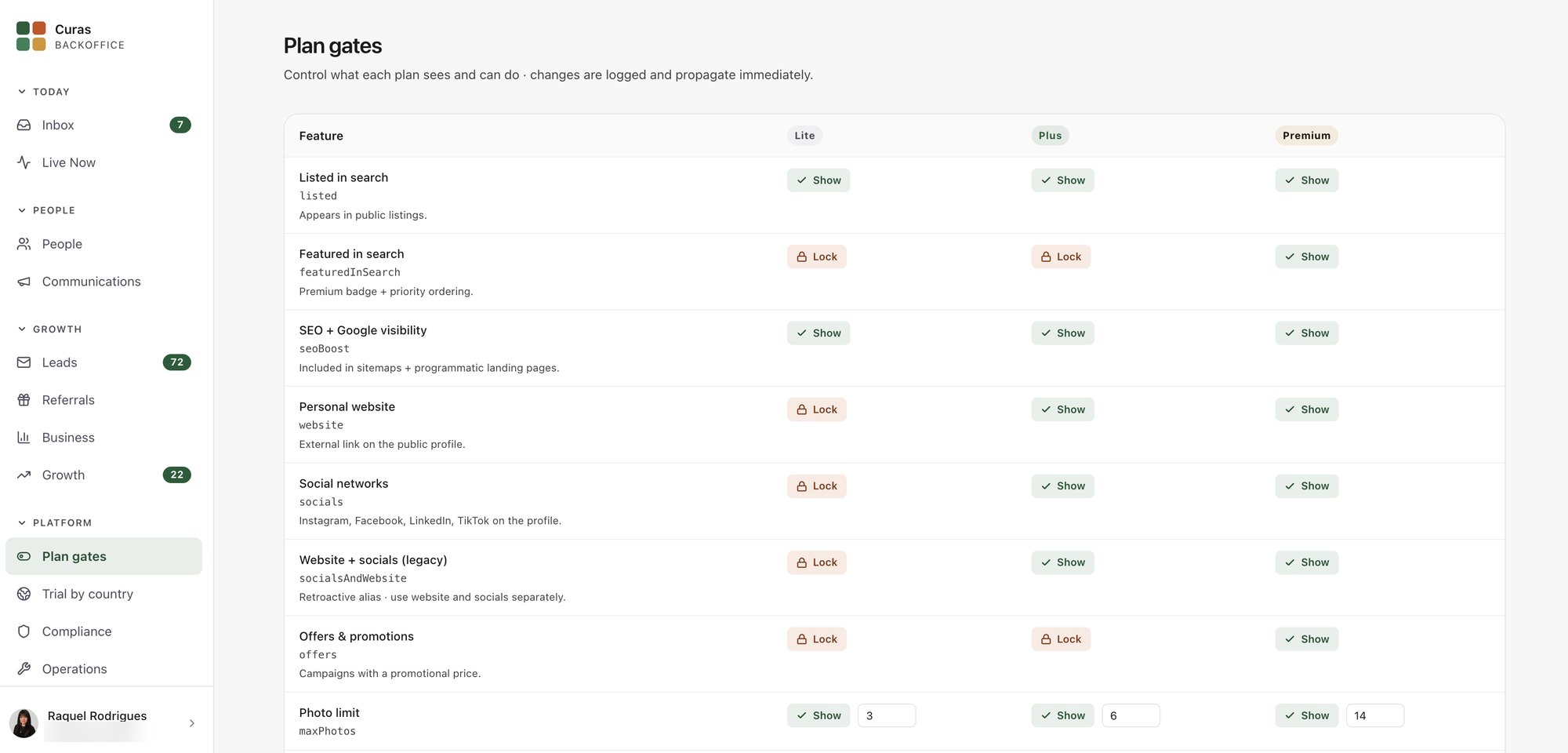
The back-office: plan gates, what each tier unlocks -
Putting 300 modalities into 13 areas
Organising more than 300 modalities was both a structural and a sensitive problem. Energy work and conventional therapeutic practice cannot be grouped casually, and many practitioners object to being categorised together. The taxonomy was built so every therapist recognises themselves in their category and no therapist ends up in a category they would reject.
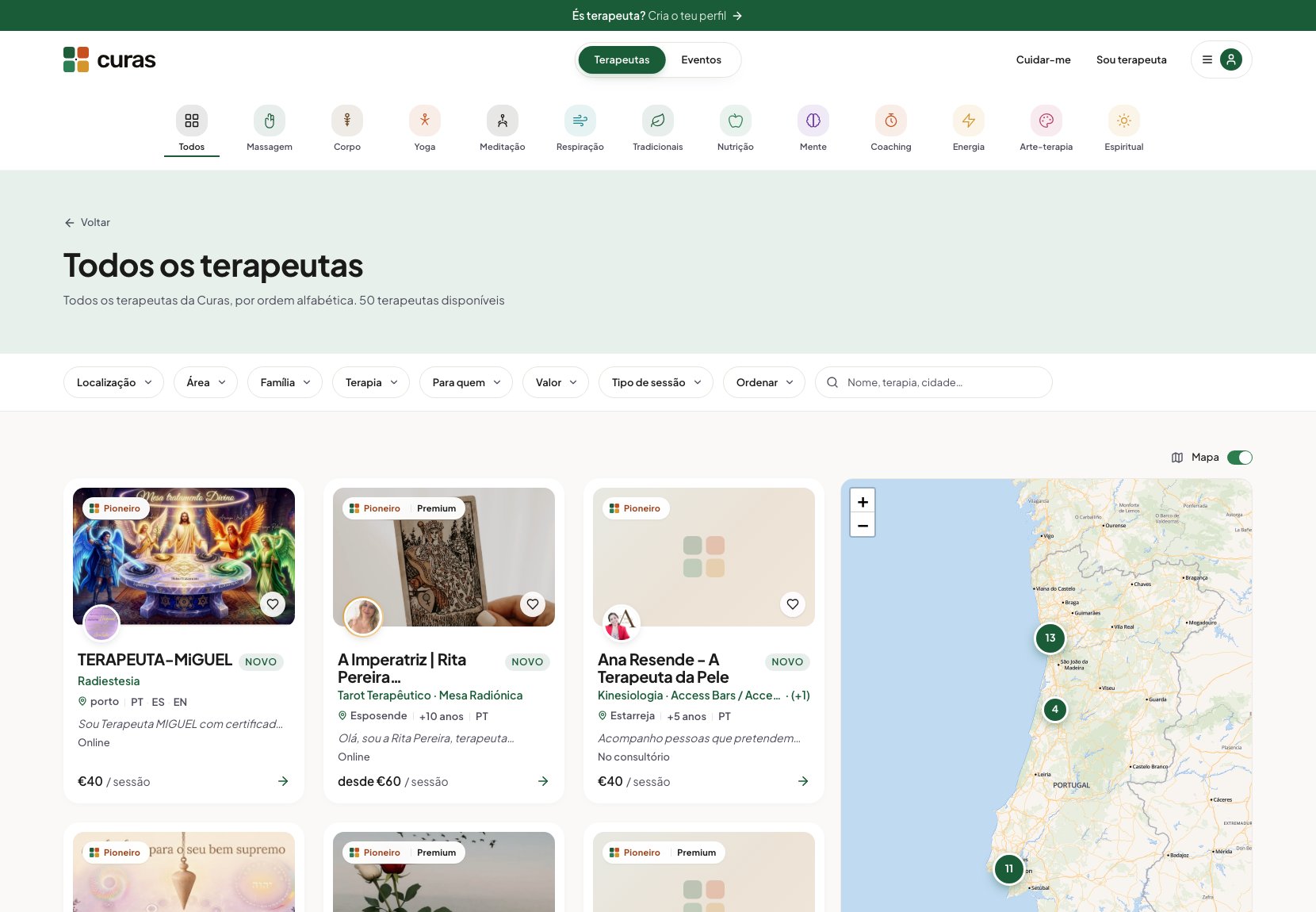
The 13 areas, live in the directory -
What made the MVP
Everything a therapist needs to run a practice made the cut: profiles, search, bookings, payments, client records, and the back-offices behind them. Anything that was not essential went to the roadmap.
-
Built for Portugal, run with agents
Curas is built for Portugal, a market I know well, where I can serve one audience properly, in Portuguese. The AI-assisted parts of the platform run on agents built with Hermes Agent, from Nous Research. ORIS is what I built Curas with; Hermes runs inside it.
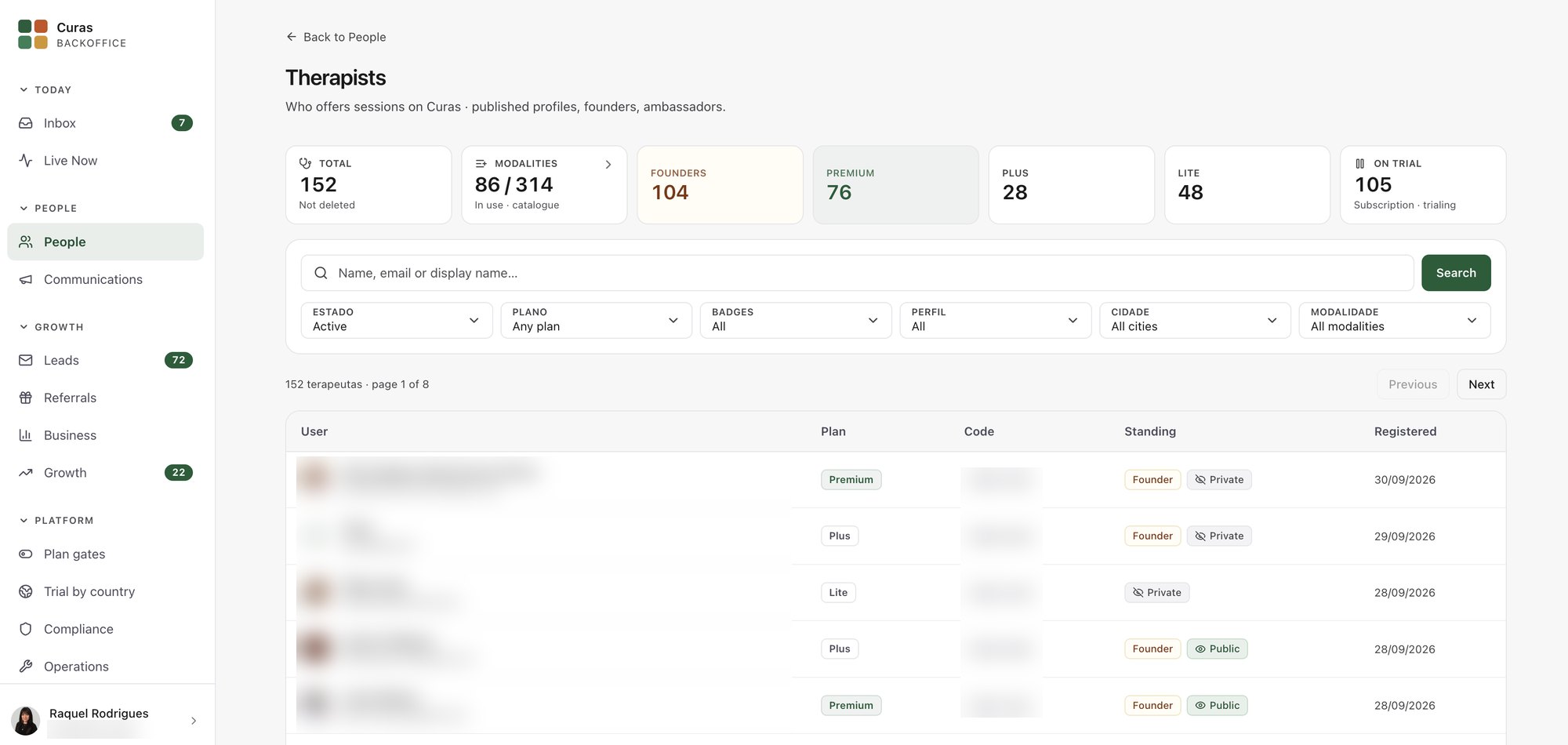
The back-office: who offers sessions on Curas. Personal data blurred -
A roadmap with an owner
What ships next and in what order is a running decision, made against real subscriber behaviour. I change things as requests come in and as the analytics and behavioural data show how people actually use it. AI-assisted analytics for therapists are already live.
The build
Designed directly in code, with AI.
The product documentation, the design system, the test suites and the QA all live inside the build itself. Four surfaces went from nothing to production in six months, all of them built with AI and directed by me.
The team was ORIS, the agent system I built for my own workflow. The agents handled production. I set the direction, reviewed what came back, and made every call about what shipped.
The launch was run like a product too, with a pre-launch strategy and waiting lists for therapists, companies and clients. Part of the acquisition was a launch campaign that gave therapists free months, so joining early cost them nothing. After launch the operation kept that shape: a team of agents runs the platform's marketing, and I direct it.
It was also six months of finding out exactly where AI can be trusted with production work and where it cannot. That knowledge is now part of how I run products.
The product
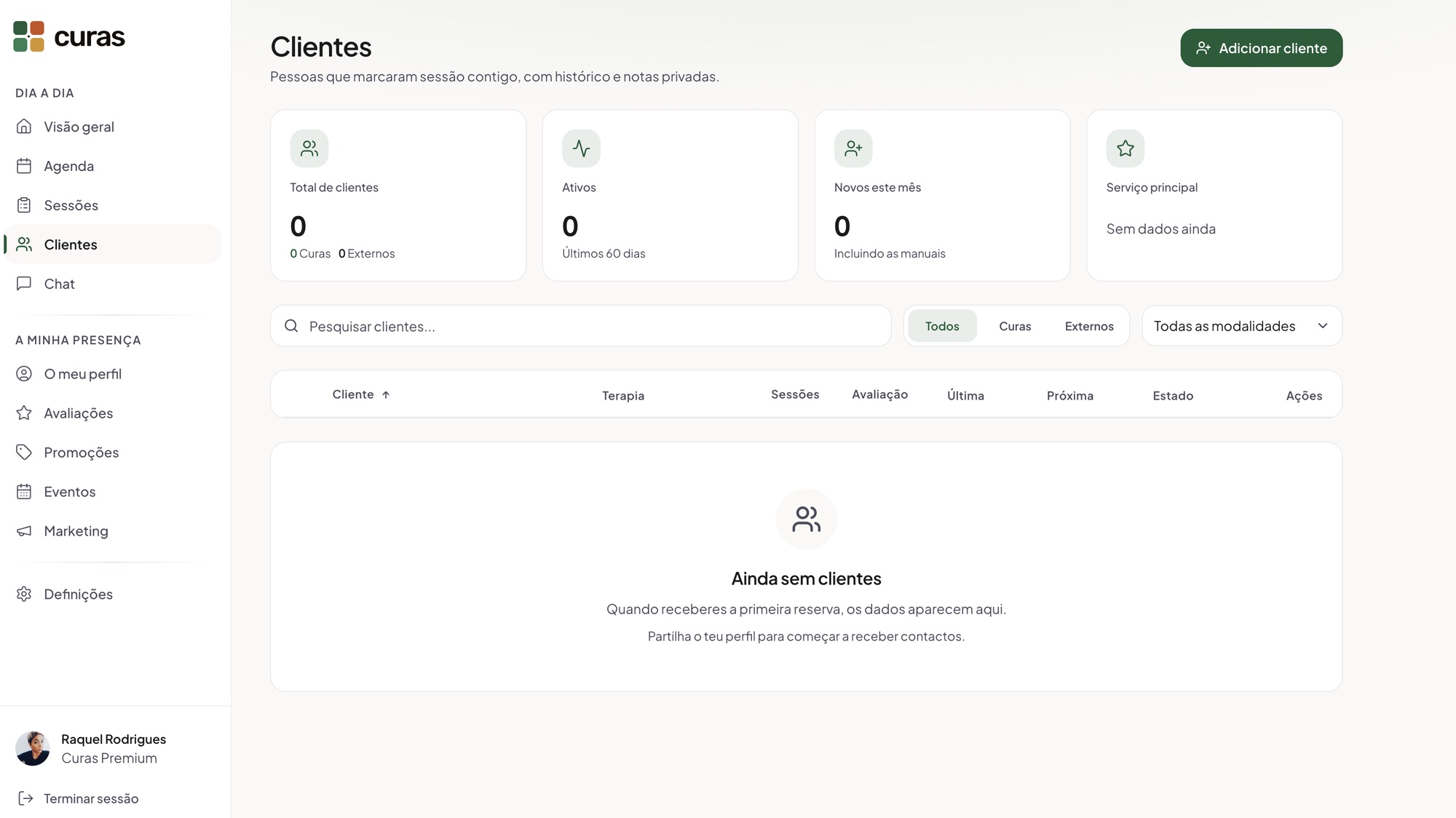
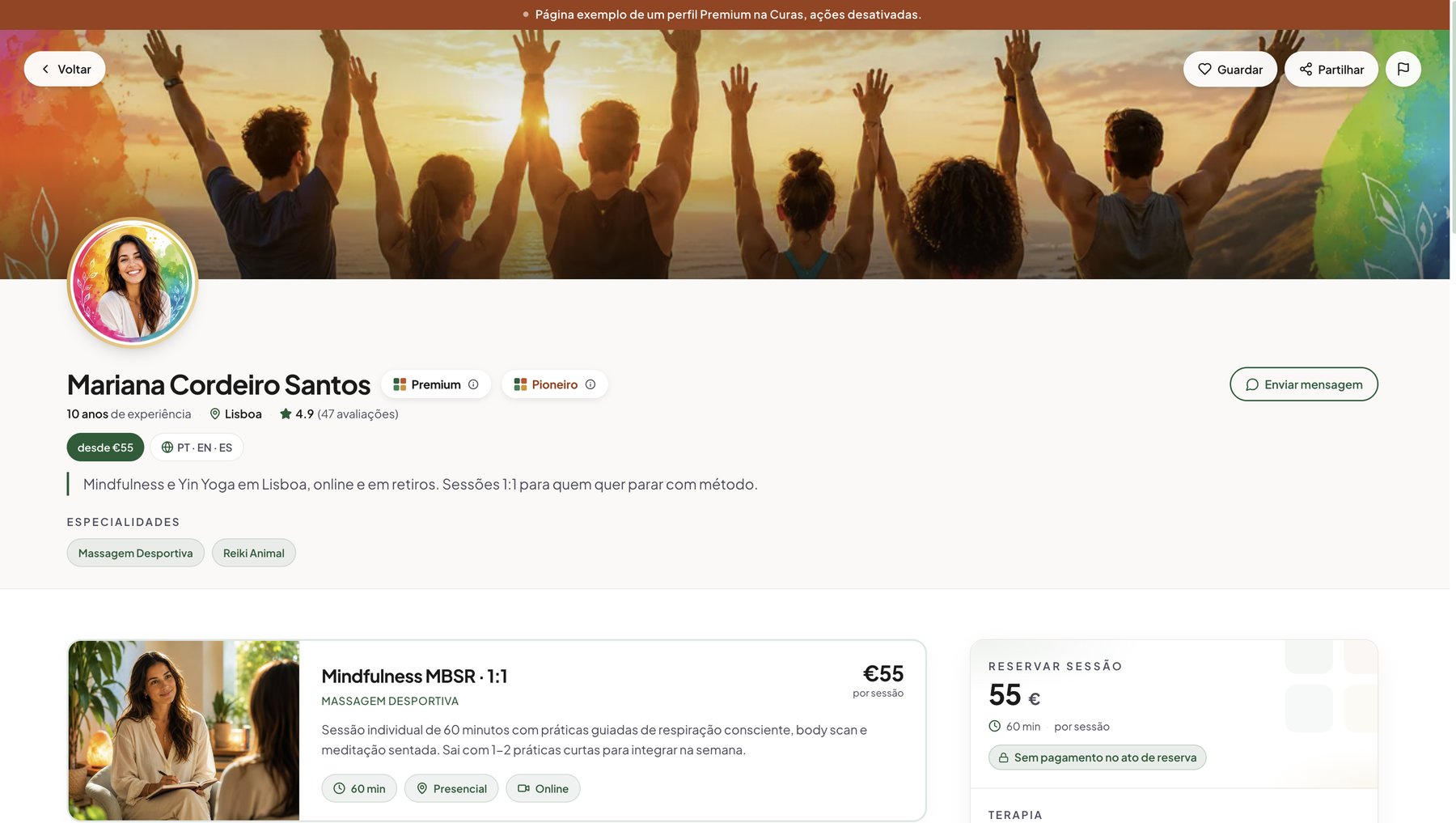
The surfaces behind the login.
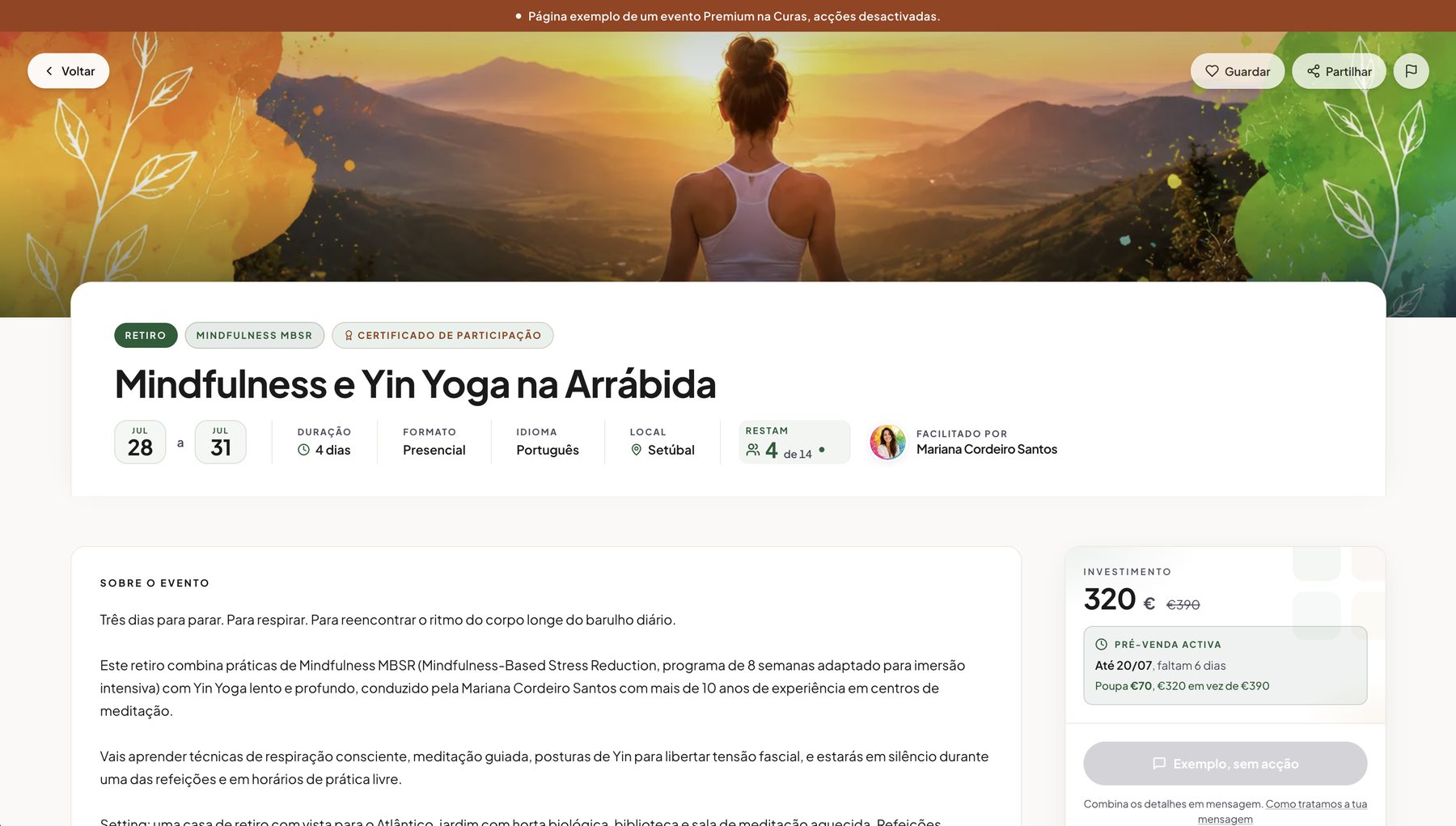
Live at curas.app, fully responsive and designed in detail for mobile.
Press and recognition
Selected for Web Summit ALPHA, and covered by NiT.
Curas was selected for the ALPHA startup programme at Web Summit Lisbon 2026, in Healthtech & wellness.
Curas on Web Summit ↗NiT told the story behind it: why it exists and how it was built alone with AI and no external funding.
Read the article in NiT ↗Reflection
“Every pricing, product and growth decision was mine to make and to own.”
Running Curas changed how I approach product work. I handle support myself and see the effect of every pricing change directly, and that operating experience informs the decisions I make on client products.
Two things I would change. Testing: the build would take the same six months, but with what I know now about directing agents on production work, QA would be set up differently from the start. And the order: the taxonomy would be built alongside the product, step by step with each feature, instead of arriving after the first ones were already live.